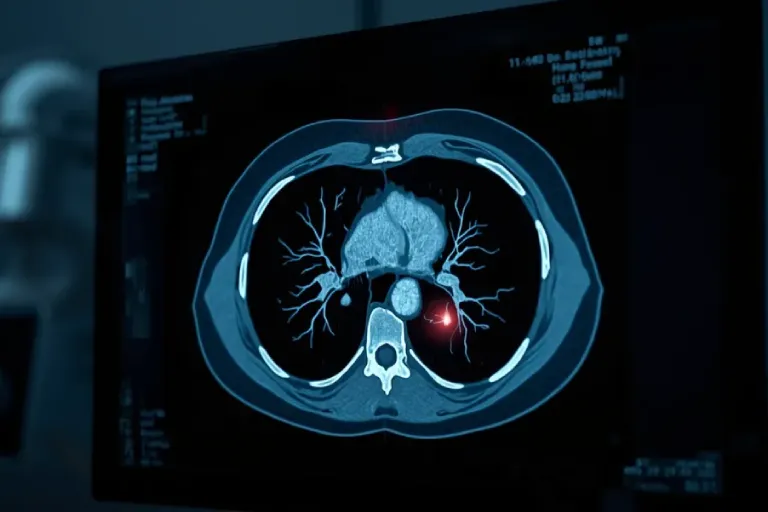
AI detects hidden disease patterns in CT scans, according to new research from Penn Medicine. Researchers developed Percival, an AI model that identifies potential health risks beyond the original reason for a scan.
Published in npj Digital Medicine, the study explores how CT scans could reveal additional health information. Percival remains in preclinical testing and is not ready for routine clinical use.
How AI analyses CT scans
Researchers trained Percival using approximately 400,000 CT scans from around 50,000 patients. The model analyses patterns linked to diagnoses, laboratory measurements and future health risks.
AI detects hidden disease patterns that could help doctors identify additional health concerns while reviewing routine scans.
Diseases identified by the AI model
The study found patterns associated with conditions including atrial fibrillation and chronic kidney disease. In evaluated comparisons, Percival also showed promise in identifying patterns linked to pancreatic cancer, cirrhosis and bacterial pneumonia.
However, these findings do not mean the model can independently diagnose these conditions. Further testing is needed to establish its reliability across different hospitals and patient populations.
What happens next for Percival?
Researchers hope to begin further testing in early 2027. They are also exploring whether larger, more diverse datasets could improve the model’s performance.
If validated, Percival could help doctors extract more information from existing medical scans and investigate potential health risks earlier. For now, it remains a research-stage technology.
The research highlights the growing role of AI in healthcare, particularly in medical imaging and early risk identification. If future studies confirm Percival’s accuracy and safety, the technology could help doctors make better use of existing CT scans and identify patients who may need further medical evaluation.
AI-powered medical imaging is an active area of healthcare research. However, doctors will still need to review flagged findings and determine whether additional tests or treatment are necessary. Clinical validation will be essential before Percival can be used to guide routine patient care.
Read more: AI-powered seizure detection for epilepsy.