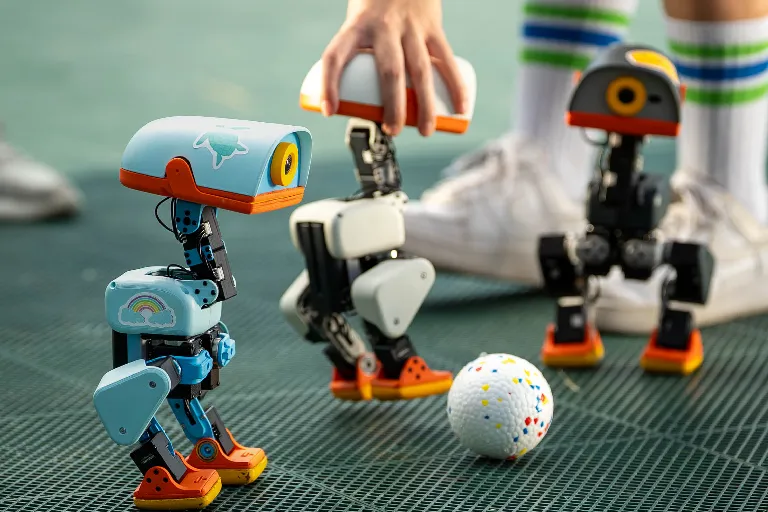
AI robot ducks are attracting attention after a viral demonstration featuring Nvidia CEO Jensen Huang helped push Microduck preorders past 20,000 units. The small robots grabbed the spotlight at Nvidia’s GTC Berlin conference. They demonstrated playful movements and responded to commands.
The surge in interest could make Microduck a popular tech gift this Christmas. The robot offers more than entertainment. It also gives developers and robotics enthusiasts a platform to experiment with artificial intelligence.
How AI robot ducks became a viral hit
A video of Jensen Huang interacting with several Microduck robots spread online after his GTC Berlin appearance. The small, duck-shaped machines waddled around, sat down and performed tricks.
TechCrunch reported that preorders had surpassed 20,000 by the day after the video went viral. Hugging Face CEO Clem Delangue shared the preorder milestone. The company also expects to deliver orders in time for Christmas, although high demand could affect shipping schedules.
The response highlights growing interest in physical AI products. These devices bring intelligent behaviour into the real world rather than keeping AI limited to chatbots and computer software.
What can the Microduck robot do?
Pollen Robotics developed Microduck as a compact, programmable robot. It can walk, sit, stand and pick up small objects with its beak. It can also recover after falling.
The robot includes sensors and hardware that let developers explore different robotics applications. Users can try its preset behaviours or train it to perform new movements.
Pollen Robotics and Hugging Face have presented Microduck as an open-source platform. Developers can experiment with its capabilities and share their creations with the community.
That approach sets Microduck apart from conventional electronic toys. Its appeal comes from both its playful design and its potential as a hands-on robotics project.
How AI training powers Microduck
Microduck’s development connects to a wider trend in AI-powered robotics. Developers can train robot movements in simulations before transferring those behaviours to physical machines.
This approach lets researchers test movements in a virtual environment first. They can then evaluate how those movements work in the real world.
Owners and developers can also explore new behaviours. The open-source approach encourages experimentation and collaboration.
The project reflects the rise of physical AI. This field combines artificial intelligence, sensors and machines to help devices interact with their surroundings.
Microduck price and availability
Microduck launched with a starting price of $399. Its target audience includes AI developers, robotics enthusiasts and people who enjoy experimenting with programmable machines.
The preorder surge suggests that small robots could attract buyers beyond traditional research and industrial markets. However, Microduck does not aim to replace household assistants or perform complex chores.
Instead, the robot focuses on playful movements and hands-on experimentation. Its long-term success will depend on delivery, ease of use and the creative possibilities it offers owners.
What the preorder surge means for AI gadgets
Microduck offers a glimpse into the future of AI hardware. People may soon interact with AI through more physical devices, not just screens and voice assistants.
The robot’s viral moment also shows how a live demonstration can introduce a technical product to a wider audience. A familiar public figure and an engaging demonstration can help an unfamiliar gadget gain attention quickly.
More than 20,000 preorders represent a promising early milestone, but they do not guarantee lasting commercial success. Microduck’s future will depend on whether buyers find lasting value beyond its novelty.
As AI expands beyond software, products like Microduck could make robotics more accessible to developers and curious consumers.