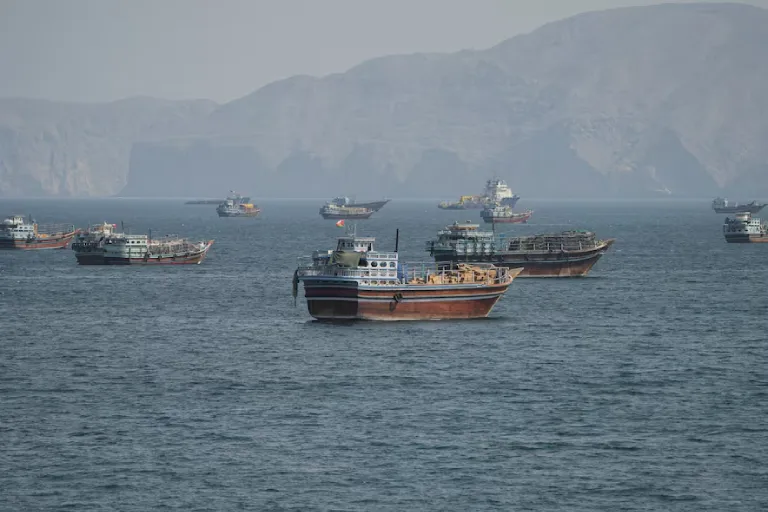
Strait of Hormuz tanker attacks are raising concerns about global oil supplies. Iran reported that seven tankers were damaged or caught fire overnight on October 22. The incidents have increased fears of further military escalation in the Middle East.
According to the Associated Press, Iranian state television attributed the incidents to attacks and naval mines. However, the news agency could not independently verify these claims. The reports come as commercial shipping faces growing risks across the region.
The Strait of Hormuz is a crucial route for international energy shipments. Prolonged disruption could increase shipping costs and put pressure on global oil markets.
Strait of Hormuz tanker attacks raise shipping concerns
Iranian state television reported that four tankers were targeted during oil transfers. It said three others were damaged after reportedly striking naval mines. Iranian authorities did not immediately provide details about the vessels or possible casualties.
The reports emerged amid a wider increase in maritime attacks. Reuters reported on October 23 that October had become the worst month on record for attacks on commercial shipping in the area.
A Washington Institute for Near East Policy researcher recorded 28 confirmed and reported attacks during October. The total since the conflict began in February had reached 113. The International Maritime Organization also recorded numerous incidents across the Strait of Hormuz and the wider Middle East.
These figures highlight the risks facing vessels in this strategic waterway. However, incomplete reporting means the full scale of the attacks remains uncertain.
Why the Strait of Hormuz matters
The Strait of Hormuz connects the Persian Gulf with the Gulf of Oman. Oil-producing countries use this passage to transport crude oil and petroleum products to global markets.
A prolonged disruption could force shipping companies to reconsider their routes. It could also increase insurance premiums and freight charges. Businesses may eventually pass these additional costs on to consumers.
Higher oil prices can affect transport, manufacturing and household budgets. The overall impact would depend on how long the disruption lasts. Alternative supply routes and global oil inventories would also influence prices.
Saudi Arabia operates an East-West pipeline that can transport oil towards the Red Sea. This provides an alternative to the Strait of Hormuz. However, alternative infrastructure cannot fully eliminate the risks of a major shipping disruption.
Iran warns of further escalation
Iran has warned that attacks on its interests could trigger further military action. Its Revolutionary Guard has also threatened US military bases in the region. The warnings add to uncertainty surrounding commercial shipping.
The United States and Iran remain at odds over control of the waterway. Their confrontation has disrupted regional trade and increased concerns about energy security.
Diplomatic efforts could help reduce tensions and restore confidence among shipping operators. However, further military escalation could create additional risks for vessels and their crews.
How tanker attacks could affect oil prices
The Strait of Hormuz tanker attacks could keep energy markets sensitive to new developments. Further vessel damage or restrictions on shipping could increase concerns about supply disruptions.
However, the reported incidents do not guarantee an immediate rise in oil prices. Markets also respond to production levels, inventories and global demand. The availability of alternative routes can influence price movements as well.
The impact will depend on whether commercial shipping can continue safely. Higher insurance costs and freight rates could affect energy deliveries even if oil production remains stable.
What happens next?
The latest reports highlight the importance of maritime security to global energy supplies. Shipping companies will watch for further attacks and changes in regional security conditions.
Independent verification will be important in establishing the full scale of the reported incidents. Authorities and maritime agencies may provide additional details as investigations continue.
For now, the situation remains uncertain. A diplomatic breakthrough could ease pressure on shipping and energy markets. Further escalation could deepen disruption across one of the world’s most important oil transit routes.