
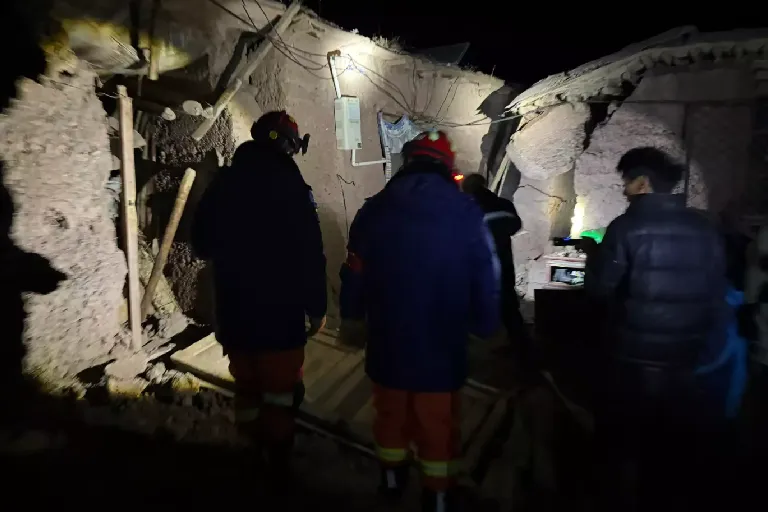
A powerful Tibet earthquake has killed at least 16 people and injured 65 others in China’s northern Tibet region. Rescue teams are searching affected communities after the magnitude-7.0 earthquake struck near Nagqu on Thursday night, October 22.
The earthquake destroyed hundreds of homes and forced thousands of residents to seek safer shelter. Authorities are assessing the damage and providing emergency assistance. Reuters reported 16 deaths and 65 injuries on October 23.
Tibet earthquake damages homes and infrastructure
The earthquake struck at approximately 10:33 p.m. local time. Its epicentre lay in a sparsely populated, high-altitude area of Nagqu in northern Tibet.
Reports citing local authorities said the quake destroyed at least 339 homes and 20 livestock sheds. It also damaged buildings in nearby villages, where some residents reported cracks in walls.
The US Geological Survey estimated the earthquake’s depth at around 18 kilometres. China’s earthquake monitoring agency reported a depth of approximately 10 kilometres. Different agencies can produce different measurements.
Rescue teams help residents reach safety
Local authorities deployed rescue workers to search affected communities and inspect damaged buildings. Teams are also helping residents reach safer locations.
Reuters reported on October 23 that authorities had relocated more than 12,000 people. Emergency workers continue to assist families whose homes suffered damage.
The region’s high altitude, cold weather and difficult terrain could slow rescue operations. Authorities are assessing conditions as relief efforts continue.
Aftershocks create further safety concerns
Smaller tremors can pose additional risks after a major earthquake. They may weaken damaged buildings and threaten residents and rescue workers.
Officials continue to monitor seismic activity in the region. Residents should follow local emergency instructions and avoid entering visibly damaged structures until authorities declare them safe.
Why earthquakes affect Tibet
Tibet lies in a seismically active part of Asia. The Indian tectonic plate pushes northward against the Eurasian plate, creating enormous geological pressure.
This collision formed the Himalayas and the Tibetan Plateau. It also contributes to earthquakes across the wider region.
Remote communities face added challenges during disasters. Mountainous terrain and long distances can make emergency response more difficult.
Rescue operations continue
Authorities continue to assess the damage and support displaced residents. Rescue teams are working to identify urgent needs and provide assistance.
Casualty figures and damage estimates may change as officials gather more information. TheNewsBit will update this report when authorities confirm further details.