Apple has entered the foldable smartphone market with its first foldable iPhone. The device, called the iPhone Duo, costs ₹2,99,900 in India. It combines a larger display with Apple’s hardware and software ecosystem. However, its premium price could limit its appeal to some buyers.
The phone became available on October 23, 2026, following pre-orders that opened on October 16. Meanwhile, strong initial demand has created supply challenges in several markets. As a result, customers may need to wait longer to receive their devices.
Apple foldable iPhone price starts at ₹2,99,900
The Apple foldable iPhone starts at ₹2,99,900 in India. In the United States, its starting price is $1,999. Apple offers storage options ranging from 256GB to 2TB.
Consequently, the device sits firmly in the premium smartphone segment. It competes with established foldable phones from Samsung and other manufacturers. However, Apple hopes its hardware, software and ecosystem will help it stand out.
For existing iPhone users, the new design offers another reason to consider an upgrade. Nevertheless, buyers must decide whether the larger display justifies the higher price.
iPhone Duo features two displays
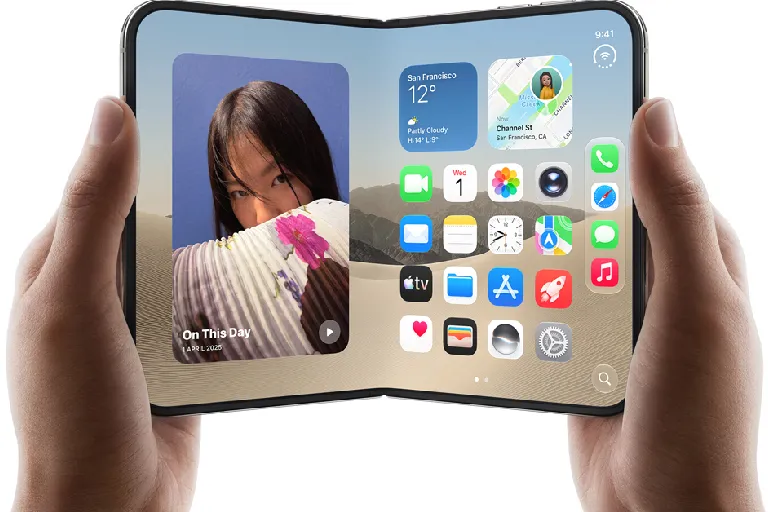
The iPhone Duo features a 5.4-inch outer display for everyday tasks. When unfolded, users can access a larger 7.6-inch inner display. This expanded screen provides more space for videos, gaming, reading and multitasking.
Additionally, Apple has developed a precision-engineered hinge for the foldable design. The company has also focused on reducing the visibility of the display crease. This detail matters because screen quality remains a key consideration for foldable phone buyers.
Apple powers the device with its A20 Pro chip. Furthermore, the phone runs iOS 27.1, which adapts the software to the larger screen. Users can therefore take advantage of multitasking features and Apple Intelligence capabilities.
Strong demand creates supply challenges
The iPhone Duo has attracted considerable interest since pre-orders began. However, limited supply has affected delivery estimates in several markets.
According to Reuters-reported coverage, some delivery estimates moved into January soon after pre-orders opened. This suggests that initial demand may have exceeded Apple’s available stock.
Apple described the response to pre-orders as extraordinary. In addition, the company limited customers to two devices per pre-order.
Foldable phones also present manufacturing challenges because of their advanced displays and complex hinges. Consequently, Apple must balance production capacity with customer demand. Its ability to increase supply could influence sales in the coming months.
Can Apple reshape the foldable smartphone market?
Apple enters a market that competitors have developed over several years. Samsung and other manufacturers already offer multiple foldable smartphone models. Therefore, Apple must give customers compelling reasons to choose its first foldable device.
However, the company has an established ecosystem that could attract existing iPhone users. These customers may welcome a larger screen without leaving Apple’s software and services.
On the other hand, the premium price could discourage budget-conscious buyers. Customers will also consider durability, battery life, camera performance and everyday usability.
Early reviews will help shape public opinion. Meanwhile, long-term reliability will remain important for buyers concerned about foldable displays and hinges. Ultimately, Apple must show that the design offers practical benefits beyond its novelty.
What happens next for Apple’s foldable iPhone?
The iPhone Duo gives Apple a new opportunity in the premium smartphone market. At the same time, its launch increases competition in the foldable segment.
Future sales will depend on customer satisfaction, product reliability and supply availability. Moreover, Apple’s ability to expand production could determine how quickly the phone reaches more buyers.
For now, the iPhone Duo represents an important step in Apple’s smartphone strategy. However, its long-term success will depend on whether consumers consider its foldable design worth the price.