
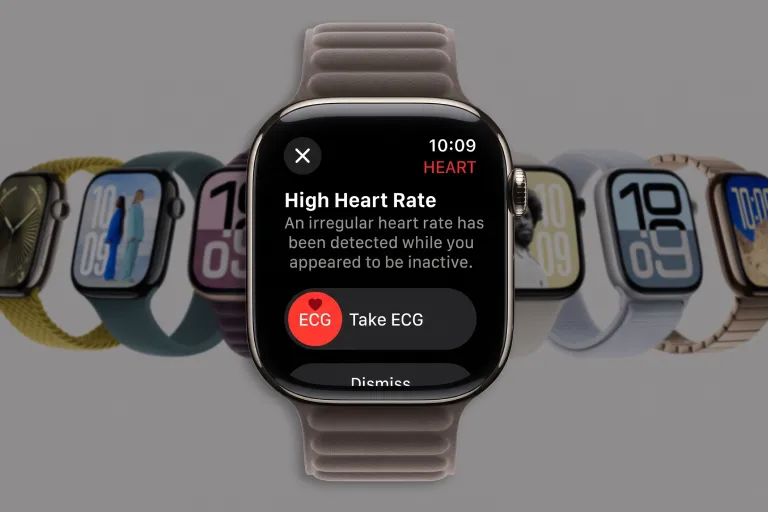
Smartwatch health features in India have stopped being a gimmick. They are now the main argument for buying a watch at all, even as the overall market shrinks.
That shift raises a question the industry prefers to leave unasked: how far can a device on your wrist be trusted with your heart? Market data, regulatory filings and clinical research point to the same answer. More than before, but less than the marketing suggests.
A shrinking market with a sharper edge
India’s smartwatch boom is over. IDC’s wearable tracker shows shipments fell 4.0% year on year in the second quarter of 2026, to about 6.4 million units. It was the tenth consecutive quarterly decline. For all of 2025, volumes dropped 17.6% to 28.9 million.
The buyers who remain are spending more. Average smartwatch prices rose nearly 24% in the quarter, and shipments of advanced smartwatches grew 94.8%, taking their share of the market from 2.2% to 4.5%. IDC expects the industry to pivot from cheap volume to health-focused, higher-value devices.
The Rs 2,000 fitness band is no longer the engine of this market. The health watch is.
What is actually on sale in India
Samsung. The ECG and blood pressure features on the Galaxy Watch4, Watch5 and Watch6 series carry clearance from the Central Drugs Standard Control Organisation (CDSCO). An ECG takes about 30 seconds and produces a PDF report on the paired phone. Blood pressure readings must be calibrated against a cuff monitor every 28 days, and both features require a Samsung phone.
Huawei. The Watch D2, launched in India in October 2025, is sold on medical-grade blood pressure and ECG claims. Its certifications come from Europe and China rather than India.
Apple. The Watch Series 12 went on sale on 18 September 2026 from Rs 56,900, with ECG, sleep apnea notifications, fall detection and emergency SOS. Its headline feature, hypertension notifications, is missing. Apple has said additional regulatory clearances are pending and that it expects the feature to arrive in India next year.
Volume brands such as boAt, Noise and Fire-Boltt dominate the budget end. Most of their models do not carry regulator-cleared ECG or blood pressure functions.
How accurate is the data
The evidence is consistent, and it varies by metric.
- Heart rate: the most dependable reading. A widely cited Stanford study of seven wrist trackers found heart rate was measured well, while no device estimated calories burned accurately. The best was off by 27% on average and the worst by 93%.
- Sleep: useful for trends, not for diagnosis. Comparisons with clinical sleep studies put typical error in total sleep time at 20 to 30 minutes, with sleep stages less reliable still.
- ECG and blood pressure: cleared features can flag an irregular rhythm or return a reading. Samsung’s own India disclosures state that they do not diagnose heart conditions or hypertension and should not guide changes to medication.
Physicians have long said the bottleneck is interpretation, not sensors. Heart rate trends and rhythm alerts can inform a consultation. Daily calorie totals and sleep scores rarely do.
What readers should do
- Treat an alert as a prompt to get checked. It is not a diagnosis.
- Repeat unusual readings. Wear the watch snug, rest the arm and measure again before drawing conclusions.
- Watch trends, not single numbers. A resting heart rate that climbs over weeks tells you more than one reading.
- Never change medication on the strength of a watch.
- Verify Indian clearance before paying a premium for a health feature. Some functions sold abroad are not approved here.
- Ignore the calorie count as a dietary guide.
Chest pain, fainting, breathlessness or a persistent irregular heartbeat warrant prompt medical attention, whatever the watch shows.
The verdict
The smartwatch is finally earning its place as a health tool in India, within limits. It is good at spotting trends, flagging rhythm irregularities and nudging people toward a check-up. It is not a clinic.
Two questions will define the next year. Will Apple secure Indian clearance for hypertension alerts in 2027? And will regulators ask cheaper brands that print the word health on the box to prove it?
This article is for information only and is not medical advice.
Read more : Apple latest series 12