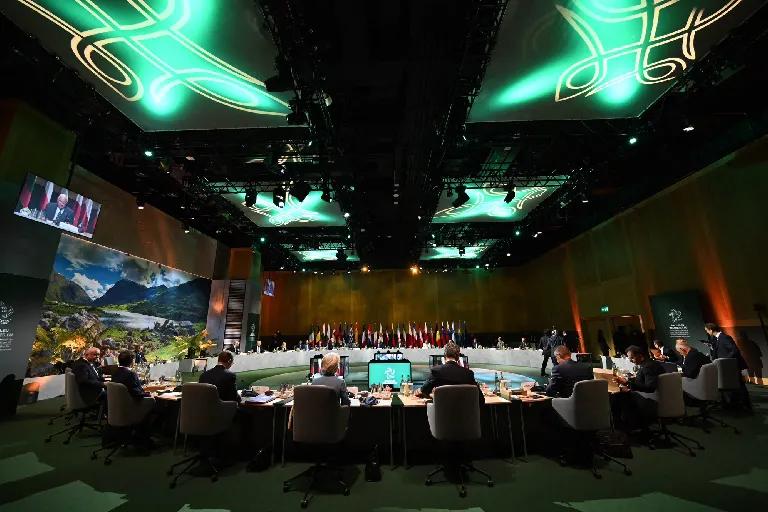
The EU AI summit is taking place in Dublin on November 13, 2026. European leaders are meeting to discuss artificial intelligence, investment and safety. The talks focus on Europe’s position in the global AI race against the United States and China.
Hosted by Ireland, the meeting explores ways to accelerate AI development. Meanwhile, leaders are examining infrastructure, regulation and technological independence. Their goal is to strengthen Europe’s position in the global technology industry.
EU AI Summit Focuses on Europe’s AI Independence
A major priority of the EU AI summit is strengthening Europe’s AI sovereignty. European policymakers want to develop stronger domestic capabilities across the AI supply chain.
These include advanced computing, semiconductor manufacturing, cloud infrastructure and AI models. Additionally, the European Union wants to reduce its dependence on foreign technology providers.
AI computing power is becoming increasingly important for economic growth and national security. Therefore, leaders are exploring ways to attract public and private investment.
They also want to expand European AI infrastructure. Furthermore, they aim to encourage AI adoption across businesses and government services.
Mistral AI and Geoffrey Hinton Join Discussions
The Dublin meeting includes contributions from two prominent figures in artificial intelligence.
Arthur Mensch is the chief executive of French AI company Mistral AI. He is expected to discuss European competitiveness and homegrown AI development.
Meanwhile, Nobel Prize-winning AI pioneer Geoffrey Hinton will contribute to discussions about AI’s wider impact.
His participation will help address concerns about safety, security and public trust. Additionally, discussions will examine how increasingly powerful AI systems could affect society.
AI Safety and Regulation Remain Key Concerns
Economic competitiveness is not Europe’s only priority. EU leaders are also examining the wider impact of AI on society.
Discussions include fundamental rights, children’s safety and democratic processes. Moreover, employment and cybersecurity remain important concerns.
European policymakers also want stronger international cooperation on AI safeguards. However, they must balance effective regulation with the need to support innovation.
Excessive restrictions could put European companies at a disadvantage. On the other hand, insufficient safeguards could create serious risks for society.
EU AI Summit Highlights Global Technology Challenges
Europe has strong research institutions and emerging AI companies. However, it continues to face major challenges against the United States and China.
The European Chips Act aims to increase Europe’s share of the global semiconductor market to 20% by 2030. Nevertheless, attracting enough manufacturing investment remains a challenge.
The EU also plans to establish seven AI gigafactories. These facilities would provide advanced computing infrastructure for large-scale AI development.
However, funding and implementation challenges have slowed progress. Consequently, the EU AI summit gives leaders an opportunity to examine these obstacles and discuss possible solutions.
What the EU AI Summit Means for the Global AI Industry
Europe’s AI strategy could influence technology markets worldwide. Its approach may shape how governments balance innovation, competitiveness and public safety.
For global technology companies, Europe’s investment and regulatory plans will be important developments to watch. Furthermore, these decisions could influence AI infrastructure development and business opportunities.
Countries are increasingly treating artificial intelligence as strategic infrastructure. As a result, AI is no longer viewed simply as another software industry.
The discussions in Dublin highlight Europe’s ambitions. Ultimately, the bloc wants a stronger role in shaping the future of artificial intelligence.