
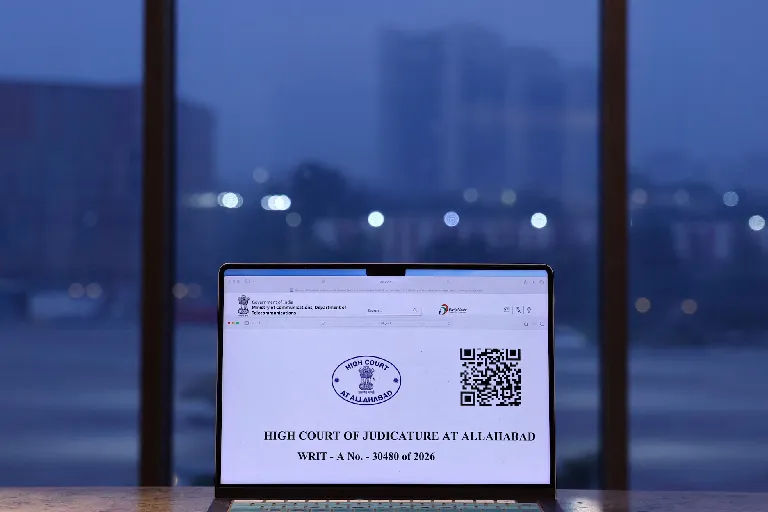
The fake court orders India controversy has reached the Prime Minister’s Office (PMO). Officials reportedly blocked 129 betting websites after receiving forged High Court documents. The PMO has now summoned Telecom Secretary Amit Agrawal to explain the security failure.
According to Reuters, the Department of Telecommunications (DoT) issued blocking instructions based on fraudulent judicial documents. The incident has raised concerns about India’s website-blocking safeguards.
Fake court orders India: How the controversy began
The case involves documents that claimed to come from the Allahabad High Court and Rajasthan High Court.
However, investigators discovered that the documents were fraudulent. They contained fake court seals, logos and QR codes.
Individuals posing as lawyers allegedly sent the documents to government officials. Authorities then acted on the requests without identifying the forgery.
As a result, internet service providers received instructions to block 129 betting websites.
PMO summons telecom secretary for explanation
The Prime Minister’s Office summoned Telecom Secretary Amit Agrawal on November 14, 2026.
According to media reports, the PMO sought an explanation about the verification failure. Agrawal reportedly cut short an official visit following the summons.
The government now faces questions about its document verification procedures.
Officials must determine why the department accepted the documents without confirming their authenticity with the courts.
Police investigate forged High Court documents
Police have launched an investigation into the suspected forgery.
Investigators are examining the documents and the individuals who submitted them. They have also requested government records and digital logs.
Meanwhile, the telecom department has started an internal review.
The review aims to identify procedural weaknesses and establish how officials processed the fraudulent orders.
Reports suggest that the forged documents remained accessible on the department’s website for months.
Fake court orders India case raises security concerns
The fake court orders India case highlights weaknesses in the country’s website-blocking system.
Government agencies must verify judicial instructions before directing internet providers to restrict access.
Otherwise, criminals could exploit similar weaknesses to target legitimate websites.
The incident also raises concerns about digital document authentication.
Fake seals, fabricated QR codes and misleading legal references can make fraudulent documents appear genuine.
However, investigators have not confirmed whether artificial intelligence helped create these documents.
What happens next?
The investigation will focus on how the fraudulent orders reached government officials.
Authorities must also determine why existing verification procedures failed.
The findings could prompt stronger safeguards for processing court-directed website restrictions.
For now, the controversy has placed India’s telecom administration under increased scrutiny.