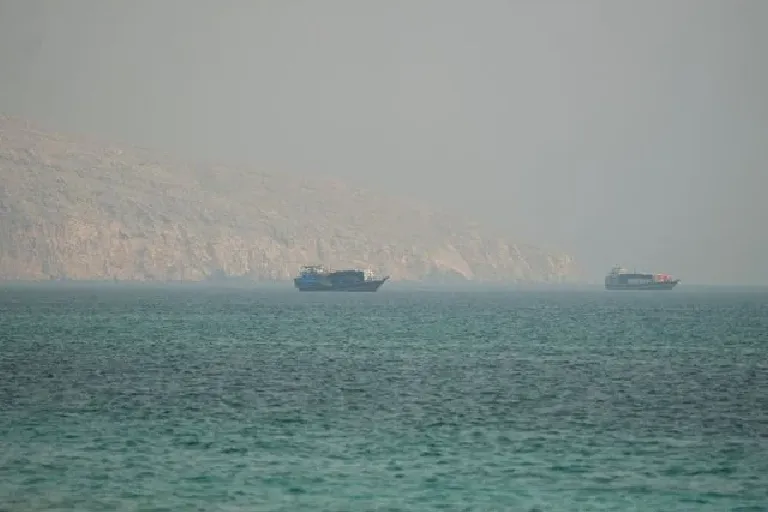
Three oil tankers reportedly caught fire after striking naval mines in and around the Strait of Hormuz, according to Iranian state television. The Strait of Hormuz tanker attacks have raised fresh concerns about commercial shipping and global energy supplies.
Iran’s Revolutionary Guards Navy said two tankers exploded after entering a restricted maritime route. Meanwhile, Iran’s regular navy reported that a third tanker caught fire east of the strait.
The reports emerged on November 14 as tensions between Iran and the United States continued to affect shipping across the Persian Gulf.
Iran reports three tanker incidents near Strait of Hormuz
Iranian state television reported that two oil tankers struck naval mines while attempting to cross the southern part of the Strait of Hormuz.
According to the Revolutionary Guards Navy, the vessels had switched off their radar and positioning systems. The statement also claimed that the ships attempted to use an unauthorised route.
One of the two vessels was reportedly a supertanker.
Separately, Iran’s regular navy said another tanker struck a mine in what it described as a prohibited maritime zone east of the strait. The vessel caught fire and was forced to stop.
However, Iranian authorities did not identify the three vessels or disclose their nationalities.
Independent confirmation remains limited
The reported tanker incidents have not received full independent verification.
The United States military has previously said it cleared the main shipping routes through the waterway of naval mines.
Furthermore, the United Kingdom Maritime Trade Operations (UKMTO) has reported separate attacks involving unidentified projectiles against commercial vessels in the region.
On November 11, UKMTO reported that an unidentified projectile struck a tanker near Ras Al-Khaimah in the United Arab Emirates. The impact caused a fire in the vessel’s engine room, but all crew members evacuated safely.
The available reports do not establish whether that incident involved any of the three tankers mentioned by Iranian authorities.
Strait of Hormuz tensions threaten global oil shipping
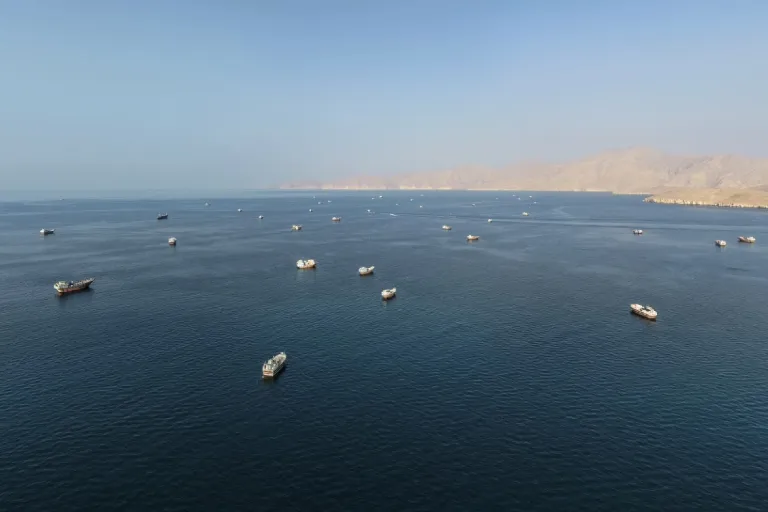
The Strait of Hormuz remains one of the world’s most important energy transportation routes.
Before the current conflict, approximately one-fifth of global oil and gas supplies passed through the strategic waterway.
However, the ongoing conflict involving Iran, Israel and the United States has disrupted commercial shipping.
Iran has also insisted that vessels obtain its authorisation before crossing certain maritime routes. Meanwhile, Washington has imposed a naval blockade on Iranian ports.
According to data cited by Reuters, at least 10 ships came under attack during the first 10 days of November. October recorded 37 attacks, the highest monthly total since the conflict began in February.
What happens next?
The latest reports could increase pressure on international shipping operators to reassess security arrangements around the Strait of Hormuz.
Oil traders and shipping companies will closely monitor further developments. Any prolonged disruption could affect energy transportation costs and global oil markets.
For now, the identities of the three reported tankers, the condition of their crews and the full extent of the damage remain unclear.
Independent confirmation of the latest Iranian claims is still awaited.