Artificial intelligence is opening new possibilities in medical research. Scientists at Stanford University and the Arc Institute have used AI to design new viruses that attack bacteria. The research could eventually support new treatments against drug-resistant infections.
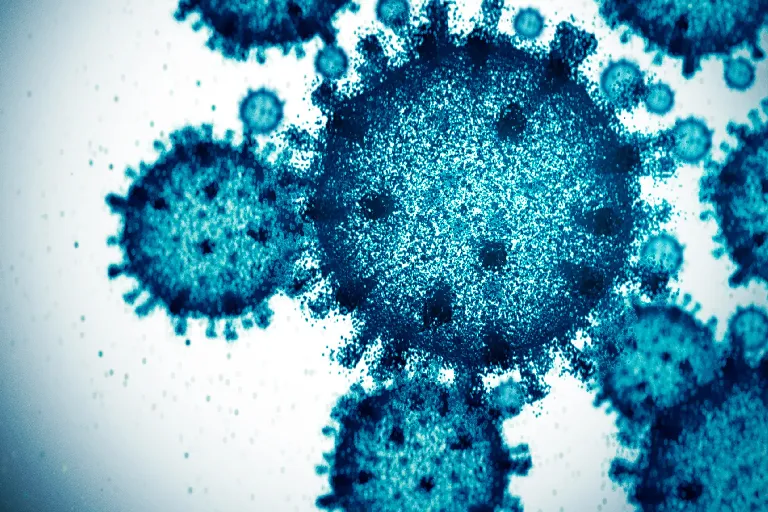
The team used AI models called Evo 1 and Evo 2 to generate new bacteriophage genomes. Bacteriophages are viruses that infect bacteria rather than human cells.
Researchers tested nearly 300 AI-designed candidates in laboratory experiments. They identified 16 functional bacteriophages capable of attacking E. coli bacteria. The findings appeared in the journal Science on August 6, 2026.
AI models create new bacteria-fighting viruses
The research team used genome language models to generate complete genetic sequences for new bacteriophages.
Unlike conventional AI models that process text, Evo 1 and Evo 2 analyse biological sequences. They learn patterns in DNA and use them to generate new genetic designs.
For this experiment, researchers focused on ΦX174, a naturally occurring bacteriophage that attacks E. coli.
The AI models generated thousands of potential genome designs. Scientists then selected nearly 300 candidates for laboratory testing.
Of these, 16 produced functional bacteriophages. Some also performed better than the original natural virus in laboratory experiments.
New phages overcome bacterial resistance
One of the most promising findings involved antibiotic and phage resistance.
Bacteria can develop resistance against treatments over time. Consequently, researchers are exploring alternative ways to target infections that no longer respond to conventional medicines.
The Stanford team tested a combination of its AI-designed bacteriophages against E. coli strains resistant to the original ΦX174 virus.
The results showed that the combination rapidly overcame resistance in three E. coli strains.
This finding highlights the potential of combining genetically different bacteriophages. Such combinations could make it harder for bacteria to resist treatment.
Could AI-designed viruses lead to new treatments?
The research could support future developments in bacteriophage therapy.
This approach uses viruses that specifically target bacteria. Scientists are studying its potential against infections that resist conventional antibiotics.
However, the latest findings remain at the laboratory research stage. The researchers have not demonstrated that these AI-designed bacteriophages can safely treat infections in humans.
Further studies must establish their safety, effectiveness and suitability for clinical use.
Researchers will also need to examine how these viruses behave inside the human body and whether they can reach specific infection sites.
AI opens new possibilities in medical research
The Stanford study demonstrates how AI can help scientists design biological systems rather than simply analyse existing data.
Moreover, the ability to generate complete genetic sequences could expand research into treatments for difficult bacterial infections.
Nevertheless, the technology also raises important biosafety questions. Scientists must ensure responsible development and carefully evaluate AI-generated biological designs.
For now, the findings represent an important proof of concept. With further research, AI-designed bacteriophages could contribute to the search for new ways to fight drug-resistant bacteria.
Read more : Mayo Clinic’s AI tool for doctors