
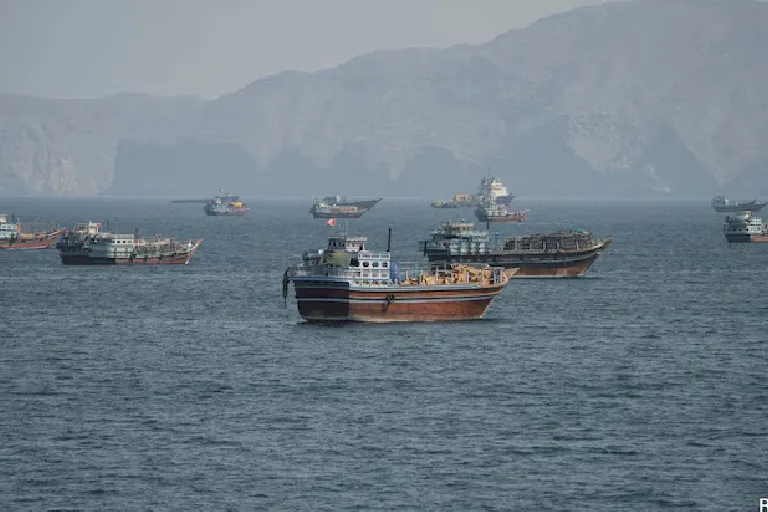
A Hormuz tanker attack has raised fresh concerns over commercial shipping after explosives struck a crude oil tanker carrying 27 Indian seafarers. All crew members escaped unharmed, according to India’s shipping minister.
The Panama-flagged vessel, MT LOUISE 1, came under attack on October 30. The explosion triggered a fire in the engine room and temporarily disrupted the tanker’s operations. However, the crew quickly extinguished the fire and resumed the vessel’s journey.
Union Minister for Ports, Shipping and Waterways Sarbananda Sonowal confirmed that all 27 Indian nationals aboard the tanker remained safe.
Limpet mines strike tanker MT LOUISE 1
Three maritime security sources told Reuters that a small boat approached MT LOUISE 1 and attached two limpet mines to its hull.
The explosives detonated shortly afterwards and caused a fire in the engine room. The blast temporarily disabled the vessel.
The United Kingdom Maritime Trade Operations (UKMTO) agency placed the attack approximately 25 nautical miles northeast of Khasab, Oman.
Meanwhile, the crew brought the fire under control. The tanker later resumed its journey towards its next port of call.
Authorities reported no environmental damage. However, investigators have not established who carried out the attack.
Second tanker carrying Indians also comes under attack
The Hormuz tanker attack followed another incident involving a commercial vessel in the same waterway.
On October 29, a projectile struck the Liberia-flagged very large crude carrier MT ARZANAH. The vessel had two Indian nationals among its crew.
Shipping Minister Sarbananda Sonowal confirmed that all crew members aboard both vessels remained safe.
Together, the two incidents involved 29 Indian seafarers. The government continues to monitor their safety and coordinate with the respective ship management companies.
Strait of Hormuz faces growing shipping security risks
The latest Hormuz tanker attack has highlighted the risks facing commercial vessels in the region.
The Strait of Hormuz connects the Persian Gulf with the Gulf of Oman and the Arabian Sea. It also serves as one of the world’s most important routes for international oil shipments.
Consequently, attacks on commercial vessels can disrupt shipping operations and increase concerns across global energy markets.
Maritime risk management company Marisks described the use of small boats to attach explosives to moving tankers as a significant security concern.
The group also highlighted how attackers can deploy limpet mines using relatively small vessels.
According to Reuters, this incident represents the first known successful limpet-mine strike against a vessel in the waterway since the US-Iran conflict began in February 2026.
India monitors the safety of its seafarers
The consecutive incidents have raised concerns about Indian maritime workers operating across the Gulf region.
India has a large workforce of merchant navy professionals serving on commercial vessels worldwide. Therefore, protecting their safety remains an important priority during regional instability.
The Indian government continues to coordinate with ship management companies and monitor developments involving the affected vessels.
Although all 29 Indian seafarers aboard the two targeted tankers remain safe, the attacks highlight the risks facing commercial shipping in the Strait of Hormuz.
Going forward, maritime security developments in the region will remain important for India and international energy markets.
Read more : Iran’s Hormuz shipping threat